See the set your
athlete did.
A remote coach works from what a client types in afterwards. A log gives you the result and little about how it was performed. Tensio sends the actual set: every rep, both sides, the tempo and the load, as it happens. You prescribe the session, Tensio records how it went, and you adjust the next one from what happened instead of what was reported.
The platform is live and free, with unlimited clients. The hardware pilot is a small, screened group; kits are not on general sale.
Don’t pay more just because you’re successful.
Clients on Tensio are free. Not five free, not twenty: unlimited. Every other platform bills you by the size of your roster, so the better you get at your job, the more you pay for the privilege of doing it. We do not charge for clients and we are not going to.
Programming, messaging, check-ins, progress photos and intake are free and stay free, whether or not a single client of yours ever wears a pod. Anything that helps you coach someone is not the thing we would put a meter on.
- Programs your athlete hears at the rack
- Write the session on the web. In the gym, your athlete asks “what’s next” and Tensio sets it up at the weight you prescribed.
- The set, as it happened
- Every set logged by voice lands in your view with what they said about it. With the bands, every rep, both sides.
- Adjust from evidence
- Change the next session from the last one. Your adjustment and the reason you gave travel with the program.
- Messaging, check-ins, intake
- The parts of coaching that are not the program, in one place, and a weekly digest of who needs you.
- Your clients keep their own log
- Everything they record is theirs on the free tier, with or without you. Nothing has to move for either of you to try it.
- Bill your own clients, later
- A business tier for coaches who charge through Tensio is built and waiting on paperwork. Until then, keep whatever you use.
The hardware pilot. A small number of coaches get kits for themselves and their clients, free, and we build the workflow around what they actually need. It is an application because we can only support a few well. You keep whatever you already use.
Two pods, because one only sees half.
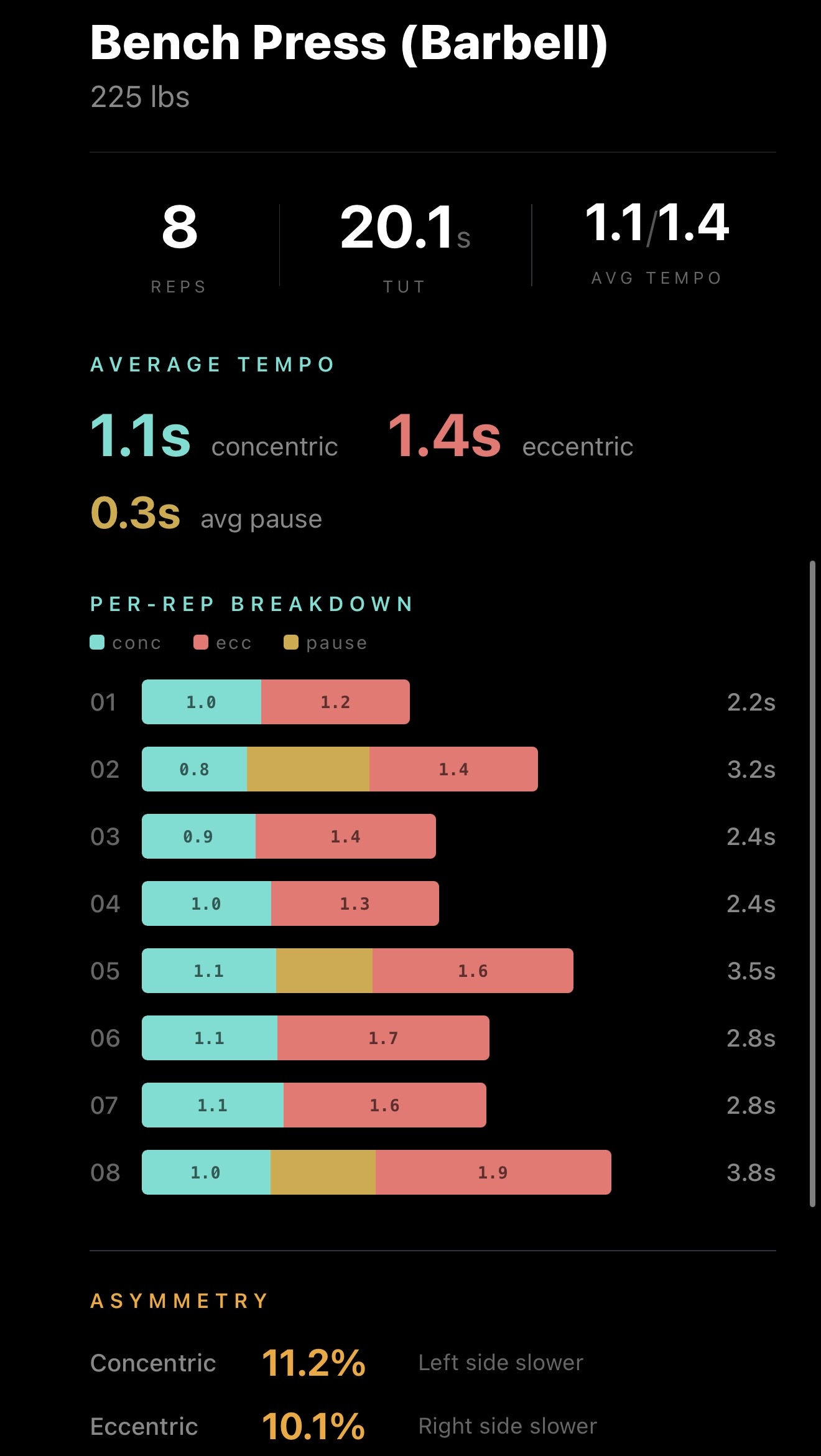
What you get after a set
- Reps
- Counted per side as they are performed, including the slow ones at the end.
- Tempo
- The concentric and the eccentric of every rep, separately, in seconds.
- Time under tension
- Real seconds of load, with the unrack, the rack and the pauses accounted for.
- Asymmetry
- Left against right, rep by rep, so you watch it develop instead of guessing.
A single sensor reports one arm as the set. Two pods, read at a hundred samples a second, measure each side against the other. Why that matters.